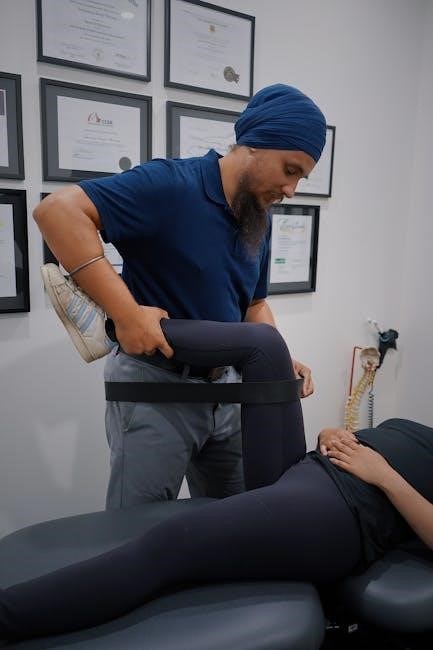
Shoulder pain impacts daily life, especially with overhead reaching; rotator cuff injuries are prevalent, particularly among those with repetitive arm movements, demanding effective rehabilitation programs.
What is the Rotator Cuff?
The rotator cuff isn’t a single muscle, but a group of four muscles – supraspinatus, infraspinatus, teres minor, and subscapularis – and their corresponding tendons. These crucial structures surround the shoulder joint, providing stability and enabling a wide range of motion. They work in harmony to lift and rotate your arm, keeping the head of the humerus (upper arm bone) securely within the glenoid cavity (shoulder socket).
Essentially, the rotator cuff acts as a dynamic stabilizer, preventing dislocation and facilitating smooth, pain-free movement. Injuries to this complex can significantly impair functionality, impacting everyday activities like reaching, lifting, and even sleeping. Understanding its anatomy is fundamental to appreciating the importance of targeted physical therapy and specific exercises designed to restore strength and stability.
Common Causes of Rotator Cuff Injuries
Rotator cuff injuries rarely stem from a single, acute event; more often, they develop gradually over time due to repetitive strain and overuse. This is particularly common in athletes involved in throwing sports (baseball, tennis), overhead workers (painters, construction), and individuals with physically demanding jobs. Age is a significant factor, as tendons naturally weaken and become more susceptible to tears with increasing years.
Poor posture, especially rounded shoulders, can also contribute by altering shoulder mechanics and increasing stress on the rotator cuff. Direct trauma, like a fall onto an outstretched arm, can cause sudden tears. Ignoring early symptoms of shoulder pain and continuing to engage in aggravating activities can exacerbate the problem, leading to more severe injuries requiring extensive physical therapy and rehabilitation.
Understanding Rotator Cuff Physical Therapy
Physical therapy is crucial for restoring shoulder function, reducing pain, and improving range of motion through targeted exercises and a structured rehabilitation program.
Goals of Physical Therapy
The primary goals of physical therapy for rotator cuff injuries revolve around pain management and restoring full shoulder functionality. Initially, therapy focuses on reducing inflammation and alleviating discomfort, enabling patients to perform daily activities with less pain. Subsequently, the emphasis shifts towards regaining a complete range of motion in the shoulder joint, often compromised by injury or post-surgical stiffness.
Strengthening the muscles surrounding the shoulder – including the rotator cuff itself, as well as the scapular stabilizers – is paramount. This builds support and control, preventing re-injury. A comprehensive program also addresses postural imbalances, as poor posture can exacerbate shoulder issues. Ultimately, physical therapy aims to return individuals to their desired activity level, whether it’s simple tasks or high-level athletic performance, ensuring long-term shoulder health and preventing future complications.
Phases of Rehabilitation
Rotator cuff rehabilitation typically progresses through three distinct phases, each building upon the previous one. Phase 1, focused on pain control and early motion, utilizes gentle exercises like pendulum swings and passive range of motion to minimize discomfort and prevent stiffness. As pain subsides, Phase 2 introduces strengthening exercises, employing resistance bands to gradually rebuild muscle strength in the rotator cuff and surrounding areas.
Finally, Phase 3 concentrates on advanced strengthening and functional exercises, mimicking real-life movements. This phase incorporates activities like overhead presses and lateral raises with light weights, preparing the shoulder for the demands of daily life or sport. Progression between phases is guided by pain levels, range of motion improvements, and strength gains, ensuring a safe and effective recovery process tailored to the individual’s needs.
Phase 1: Pain Control & Early Motion
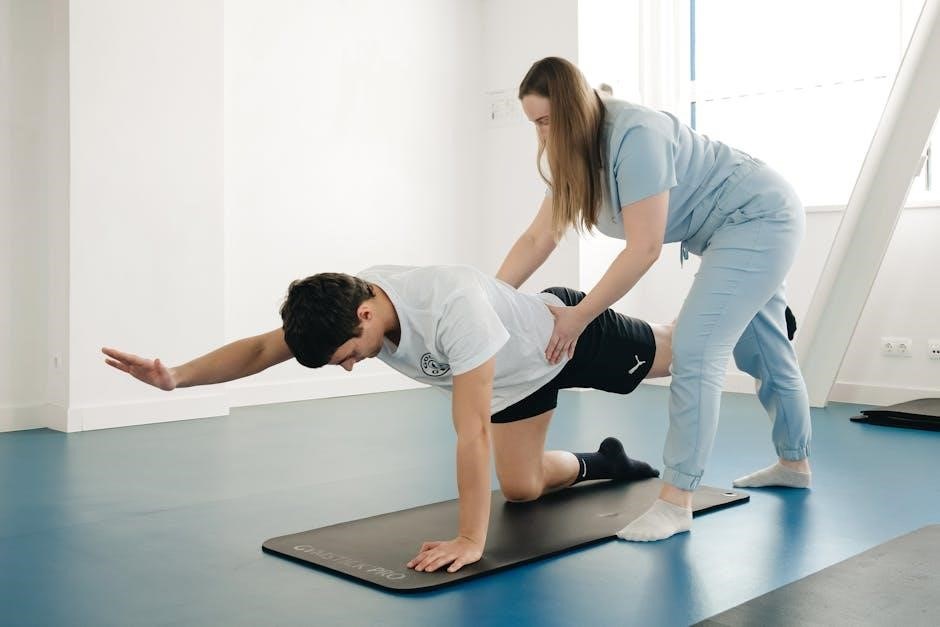
Initial recovery prioritizes reducing pain and restoring gentle movement through exercises like pendulums and passive stretches, avoiding aggravation of the injury.
Pendulum Exercises
Pendulum exercises are a cornerstone of Phase 1 rehabilitation, gently mobilizing the shoulder joint without actively engaging the injured rotator cuff muscles. To perform these, lean forward, supporting yourself with your good arm on a table or chair. Allow the affected arm to hang freely, relaxed and loose.
Initiate small, circular motions – forward, backward, and side to side – using your body weight to swing the arm. These movements should be pain-free and controlled; avoid forcing the range of motion. Gradually increase the size of the circles as comfort allows.
The goal isn’t to build strength, but to reduce stiffness and promote fluid movement within the shoulder capsule. Perform 10-20 repetitions in each direction, several times a day, as prescribed by your physical therapist. Consistency is key for optimal results during this initial phase of recovery.
Passive Range of Motion Exercises
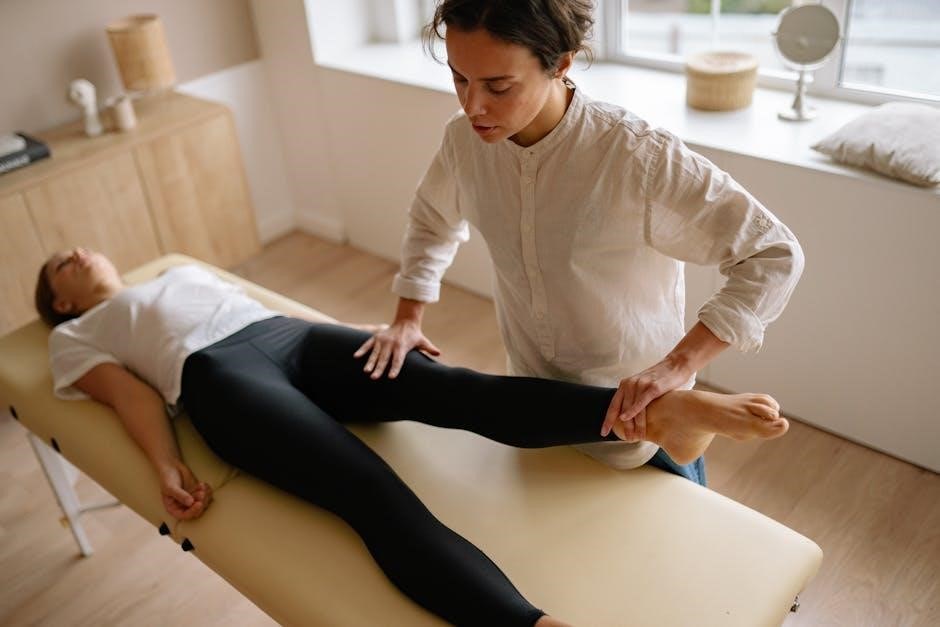
Passive range of motion (PROM) exercises are crucial in the early stages of rotator cuff rehabilitation, particularly when active movement is limited by pain or weakness. These exercises involve an external force – typically a physical therapist or a family member – gently moving your arm through its available range of motion.
Common PROM exercises include shoulder flexion (raising the arm forward), abduction (lifting the arm out to the side), and external rotation (rotating the arm outward). The patient remains relaxed during the movement, avoiding any attempt to assist or resist.
PROM helps maintain joint flexibility, prevent stiffness, and improve circulation. It’s vital to communicate any pain experienced during the exercise to the therapist, who will adjust the range accordingly. Typically, 10-15 repetitions of each exercise are performed, several times daily, under professional guidance.
Scapular Squeezes
Scapular squeezes are a foundational exercise in rotator cuff rehabilitation, focusing on strengthening the muscles that control scapular movement – crucial for shoulder stability. This exercise helps counteract the postural imbalances often contributing to rotator cuff issues, like rounded shoulders.
To perform scapular squeezes, sit or stand with good posture, then gently pinch your shoulder blades together as if trying to hold a pencil between them. Hold this contraction for 5-10 seconds, focusing on feeling the muscles between your shoulder blades engage.
Avoid shrugging your shoulders upwards during the squeeze; the movement should be solely from the scapulae drawing together. Repeat 10-15 times, several times a day. This simple exercise improves scapular control, contributing to better shoulder mechanics and reduced pain.
Phase 2: Strengthening Exercises
This phase builds upon initial gains, incorporating resistance bands to progressively strengthen rotator cuff muscles, enhancing stability and function for improved shoulder health.
External Rotation with Resistance Band
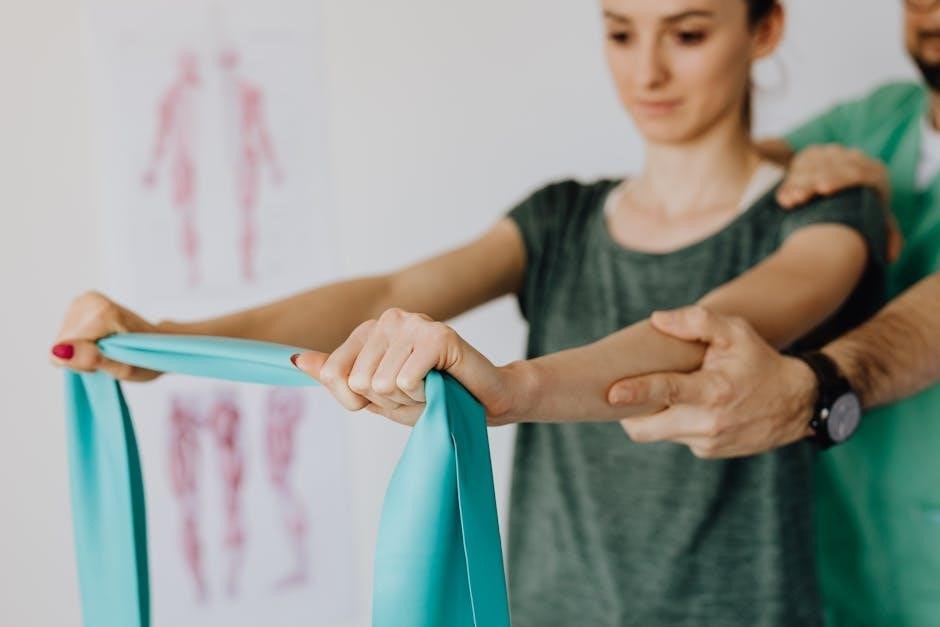
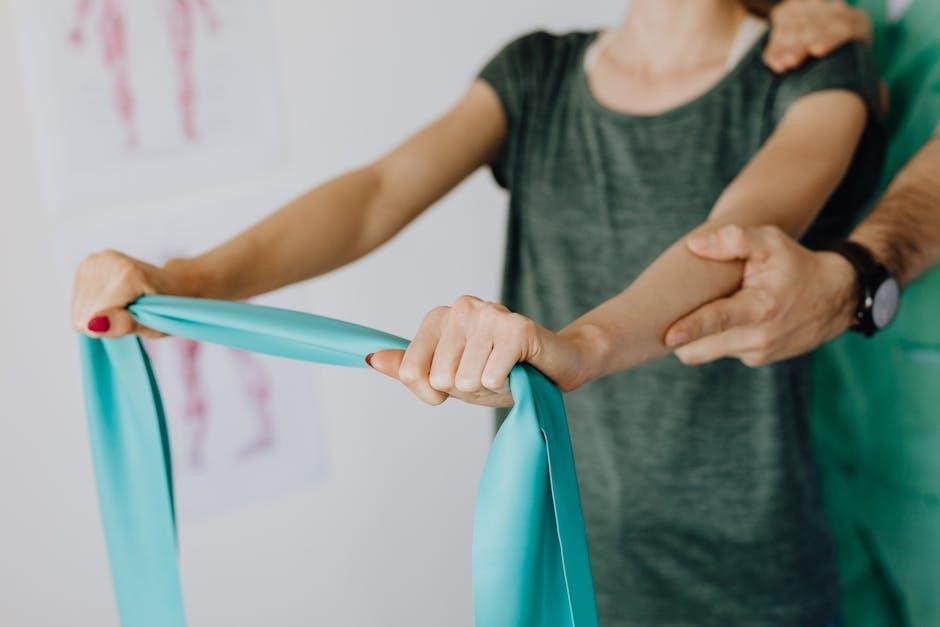
This exercise targets the infraspinatus and teres minor, crucial muscles for external rotation and shoulder stability. Secure a resistance band to a stable object at elbow height. Keeping your elbow tucked into your side at a 90-degree angle, slowly rotate your forearm outward, away from your body.
Maintain a controlled movement throughout the exercise, focusing on squeezing the shoulder blade down and back. Avoid shrugging your shoulder or letting it roll forward. Hold the rotated position for a few seconds, then slowly return to the starting position.
Begin with a light resistance band and gradually increase the resistance as your strength improves. Perform 2-3 sets of 10-15 repetitions. Proper form is essential to prevent further injury; consult a physical therapist for guidance if needed. This exercise helps restore range of motion and strength after a rotator cuff injury.
Internal Rotation with Resistance Band
Strengthening the subscapularis muscle, vital for internal rotation and shoulder stability, is achieved with this exercise. Anchor a resistance band securely to a stable object, positioning it at elbow height. Maintaining a 90-degree bend in your elbow, keep it tucked close to your body.
Slowly rotate your forearm inward, towards your abdomen, resisting the band’s pull. Focus on controlled movement, ensuring your shoulder blade remains stable and doesn’t move forward. Avoid compensating with other muscles. Hold the contracted position briefly, then gradually return to the starting point.
Start with a light resistance band, increasing it as your strength grows. Aim for 2-3 sets of 10-15 repetitions. Correct form is paramount to avoid re-injury; seek guidance from a physical therapist if unsure. This exercise aids in restoring full shoulder function.
Scaption Exercises
Scaption exercises target the supraspinatus and other rotator cuff muscles, improving shoulder abduction and overall stability. Stand with your arms straight, thumbs pointing upwards, in a “V” shape – this is the scaption plane, roughly 30 degrees forward of your side.
Holding light dumbbells (or no weight initially), slowly raise your arms out to the sides, maintaining the thumb-up position. Avoid shrugging your shoulders or leaning your body. Focus on controlled movement, feeling the muscles engage.
Raise your arms to shoulder height, then slowly lower them back down. Begin with 2-3 sets of 10-15 repetitions, using a weight that allows you to maintain proper form. Proper execution is crucial; consult a physical therapist for personalized guidance and progression. This exercise enhances shoulder function and reduces pain.
Rows with Resistance Band
Resistance band rows strengthen the posterior shoulder muscles, including the rotator cuff, improving posture and shoulder blade control. Secure a resistance band around a stable object at chest height. Sit or stand with good posture, holding the ends of the band with your palms facing each other.
Keeping your back straight and core engaged, pull the band towards your chest, squeezing your shoulder blades together. Maintain your elbows close to your body throughout the movement. Avoid twisting or using momentum.
Slowly return to the starting position, controlling the band’s resistance. Perform 2-3 sets of 10-15 repetitions. Adjust the band’s resistance to match your strength level. This exercise is vital for restoring shoulder function and reducing pain, promoting balanced muscle development.
Phase 3: Advanced Strengthening & Functional Exercises
This phase focuses on regaining full shoulder strength and function, incorporating exercises mimicking daily activities to prepare for a return to normal life.
Overhead Press with Light Weight
The overhead press, performed with minimal weight – typically 1-3 pounds initially – is a crucial exercise in Phase 3, targeting the deltoid and upper trapezius muscles while reinforcing rotator cuff stability. Begin seated or standing with good posture, elbows bent at 90 degrees, and palms facing forward. Slowly press the weight upwards, extending your arms overhead, maintaining control throughout the movement.
Avoid arching your back or using momentum; focus on a smooth, controlled ascent and descent. Ensure your shoulder blades remain stable and do not shrug upwards. Start with 8-12 repetitions for 2-3 sets, gradually increasing the weight as strength improves. This exercise mimics functional movements like reaching for objects on high shelves, rebuilding real-world shoulder capabilities. Proper form is paramount to prevent re-injury; consult your physical therapist for personalized guidance and progression.
Lateral Raises with Light Weight
Lateral raises, utilizing very light dumbbells (1-3 pounds), are integral to Phase 3 rehabilitation, focusing on the medial deltoid and enhancing shoulder abduction strength. Stand with feet shoulder-width apart, a slight bend in your elbows, and palms facing your body. Slowly raise your arms out to the sides, keeping them straight but not locked, until they reach shoulder height.
Maintain a controlled tempo, avoiding jerky movements or swinging the weights. Focus on initiating the lift with your shoulder muscles, not momentum. Ensure your shoulder blades remain stable and avoid shrugging. Perform 8-12 repetitions for 2-3 sets, progressively increasing the weight only when proper form is consistently maintained. This exercise improves reaching and overhead activities. Prioritize form to prevent strain; seek guidance from your physical therapist for personalized adjustments.
Bicep Curls
Bicep curls, performed with light dumbbells (2-5 pounds), contribute to overall shoulder stability by strengthening the biceps brachii, a key muscle involved in shoulder flexion and stabilization. Stand with feet shoulder-width apart, knees slightly bent, and palms facing forward. Keeping your elbows close to your body, slowly curl the weights up towards your shoulders, squeezing your biceps at the top of the movement.
Lower the weights back down in a controlled manner, resisting the pull of gravity. Avoid swinging your body or using momentum to lift the weights. Focus on isolating the biceps muscle and maintaining proper form throughout the exercise. Perform 8-12 repetitions for 2-3 sets. This exercise aids in functional movements like lifting and carrying. Consult your therapist for appropriate weight selection and technique.
Tricep Extensions
Tricep extensions, utilizing light dumbbells or resistance bands, are crucial for strengthening the triceps brachii, which plays a vital role in shoulder extension and stabilization. Begin by standing or sitting with a weight or band secured overhead. Keeping your upper arm stationary, slowly extend your forearm, straightening your elbow and contracting your triceps.
Maintain a controlled movement throughout the exercise, avoiding any jerky motions. Focus on isolating the triceps muscle and ensuring proper form. Lower the weight or return the band to the starting position in a slow, deliberate manner. Perform 8-12 repetitions for 2-3 sets. This exercise supports daily activities involving pushing and reaching. Always prioritize proper technique and consult with your physical therapist for guidance.
Specific Exercises for Rotator Cuff Repair
Post-repair exercises focus on regaining motion and strength, starting with gentle isometrics and progressing to Codman’s exercises for pain-free range of motion.
Isometric Exercises
Isometric exercises are crucial early in rotator cuff rehabilitation, particularly after repair, as they allow muscle engagement without joint movement, minimizing stress on the healing tendons. These exercises involve contracting the muscles against an immovable object or your own hand, holding the contraction for several seconds, and then relaxing.
Examples include pressing your palm against a wall (for external rotation), attempting to rotate your arm outward while your hand resists the movement, and pressing your arm inward against resistance. Internal rotation isometrics involve pushing your hand against a wall or your other hand while trying to rotate your arm inward.
Focus on maintaining proper form and avoiding any pain during these contractions. Isometric exercises help maintain muscle strength and prevent further atrophy during the initial phases of recovery, preparing the muscles for more dynamic movements later in the rehabilitation process. Always perform these under the guidance of a physical therapist.
Codman’s Exercises
Codman’s exercises, also known as pendulum exercises, are a cornerstone of early-phase rotator cuff rehabilitation, focusing on gentle, pain-free motion to restore range of motion and reduce stiffness. These exercises involve leaning forward, supporting yourself with your good arm, and allowing the affected arm to hang freely like a pendulum.
Small, circular motions are then initiated, gradually increasing in size as tolerated. Movements should be performed in all directions – forward/backward, side-to-side, and circular. The key is to use the momentum of the arm rather than actively contracting the shoulder muscles, minimizing stress on the injured tissues.
Codman’s exercises promote synovial fluid circulation, preventing adhesions and improving joint lubrication. They are typically performed for several repetitions, multiple times a day, and are a gentle way to begin restoring shoulder mobility without exacerbating pain. A physical therapist can guide proper technique.
Home Exercise Program Considerations
Consistency is vital; perform exercises as prescribed, focusing on proper form to maximize benefits and prevent re-injury, alongside doctor’s guidance.
Frequency and Duration
The frequency and duration of your rotator cuff home exercise program are crucial for optimal recovery and preventing re-injury. Generally, exercises should be performed 2-3 times daily, consistently, to reinforce muscle strengthening and improve range of motion. Initially, each exercise session might be relatively short, lasting around 15-20 minutes, focusing on controlled movements rather than extended repetitions.
As your pain subsides and strength improves, you can gradually increase the duration and intensity of your workouts. It’s important to listen to your body and avoid pushing through significant pain. A typical progression might involve increasing repetitions, sets, or resistance band strength over several weeks. Remember, consistency is key; even short, regular sessions are more beneficial than infrequent, lengthy ones. Your physical therapist will provide a tailored schedule based on your specific needs and progress, ensuring a safe and effective rehabilitation journey.
Proper Form and Technique
Maintaining proper form and technique during rotator cuff exercises is paramount to avoid exacerbating your injury and maximizing rehabilitation benefits. Focus on slow, controlled movements throughout each exercise, avoiding any jerky or rushed motions. Engage your core muscles to stabilize your body and prevent compensatory movements that could strain other areas.
Pay close attention to your posture, keeping your back straight and shoulders relaxed. If using resistance bands, ensure they are securely anchored and that you’re applying resistance in the correct direction. It’s beneficial to perform exercises in front of a mirror to monitor your form, or, ideally, under the guidance of a physical therapist. Incorrect technique can hinder progress and potentially cause further damage, so prioritize quality over quantity. Prioritize learning the correct method before increasing resistance or repetitions.
Resources for Rotator Cuff Exercise PDFs
Numerous online sources offer rotator cuff exercise PDFs, but doctor supervision is crucial to ensure safety and effectiveness of any rehabilitation program.
Reliable Online Sources
Finding trustworthy resources for rotator cuff exercise PDFs requires careful consideration. Yoga Journal provides insights into shoulder health for yogis, acknowledging the joint’s vulnerability. Several healthcare organizations and physiotherapy clinics offer downloadable PDFs detailing rehabilitation exercises. Look for resources from reputable hospitals or medical centers, ensuring the content is created or reviewed by qualified professionals.
Websites like those associated with orthopedic surgeons or physical therapy practices often have patient education sections with downloadable exercise guides. Always verify the source’s credentials and date of publication to ensure the information is current and evidence-based. Be cautious of generic exercise programs without personalized guidance, as individual needs vary significantly. Remember, these PDFs are supplementary tools and should not replace a tailored program designed by your doctor or physical therapist.
Importance of Doctor Supervision
While numerous rotator cuff exercise PDFs are available online, direct doctor supervision remains crucial for safe and effective rehabilitation. Self-treating based solely on downloaded materials can be risky, potentially exacerbating the injury or hindering proper healing. A physician accurately diagnoses the specific rotator cuff issue – partial tear, full tear, tendinitis – dictating the appropriate exercise protocol.
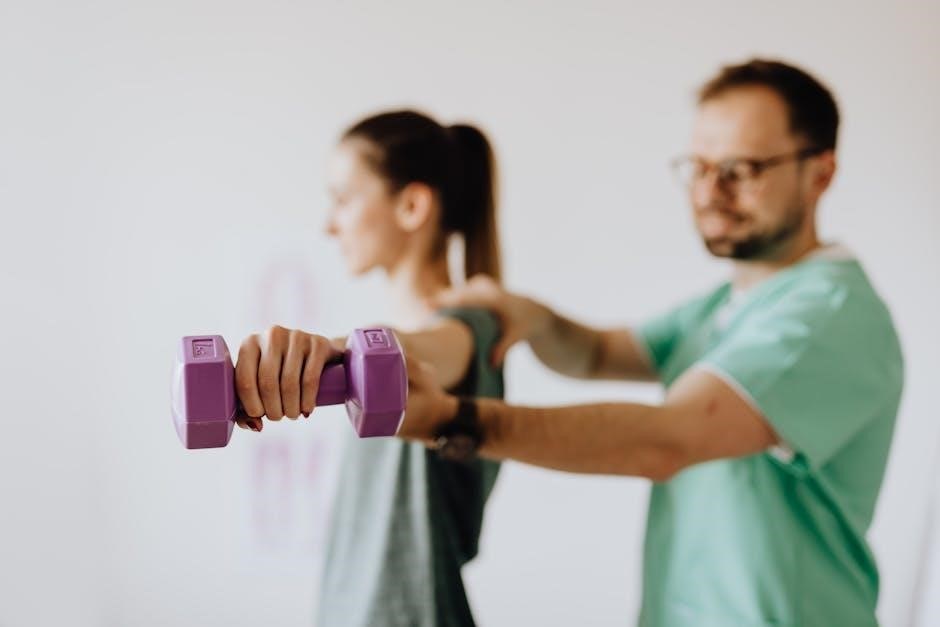
A physical therapist, under a doctor’s guidance, tailors a program to your individual needs, considering pain levels, range of motion, and functional goals. They ensure correct form and technique, preventing further damage. Regular check-ins allow for adjustments based on your progress. Remember, PDFs offer general guidelines; professional oversight guarantees a personalized, safe, and optimized recovery journey, maximizing the chances of restoring full shoulder function.